
Over the past 12 months, we made a bold decision:
Transform our engineering organization into an AI-first company.
Not by adding AI features.
But by embedding AI into the entire engineering ecosystem.
Today, AI powers how we:
• Design products
• Build software
• Automate workflows
• Deliver solutions to clients
The result?
Faster development, smarter systems, and scalable innovation.
Many companies want to adopt AI, But they approach it the wrong way
Instead of systematically integrating AI, they experiment with random tools.
This leads to three major challenges:
AI projects fail beyond prototypes due to lack of scalability and long-term vision.
The obstacles preventing successful deployment across the enterprise landscape.
• AI as standalone tool
• Lack of skilled teams
• No infrastructure
"Lack of strategy, fragmented tooling, poor SaaS integration, no automation frameworks."
Without a structured approach, AI becomes a side experiment instead of a business advantage.
To transform our organization, we developed a 4-layer AI engineering framework.
Instead of isolated AI experiments, we built an integrated AI ecosystem.
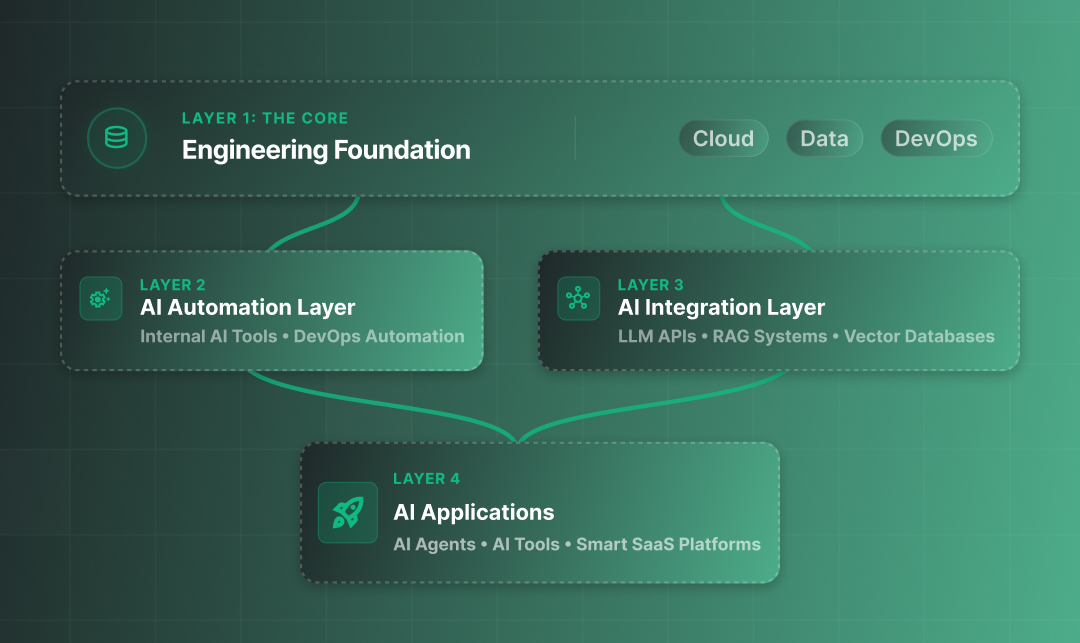
This architecture allows AI to be deeply embedded into engineering workflows.
Transforming into an AI-first company requires a clear roadmap
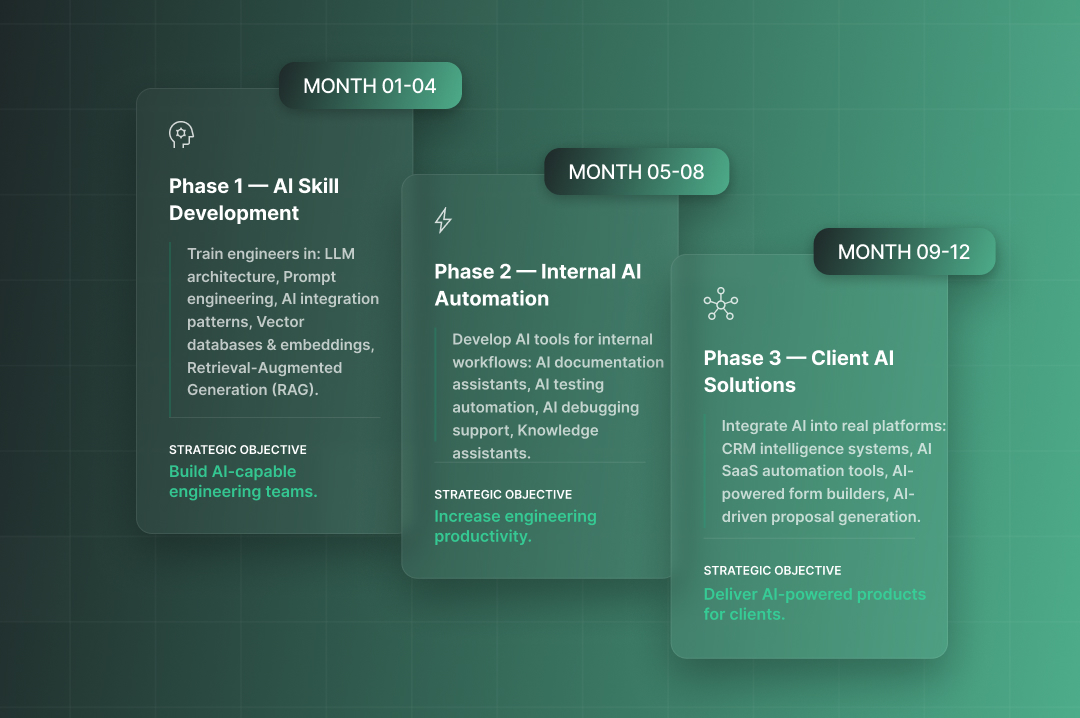
At Heaptrace Technology, we focus on 5 transformation pillars
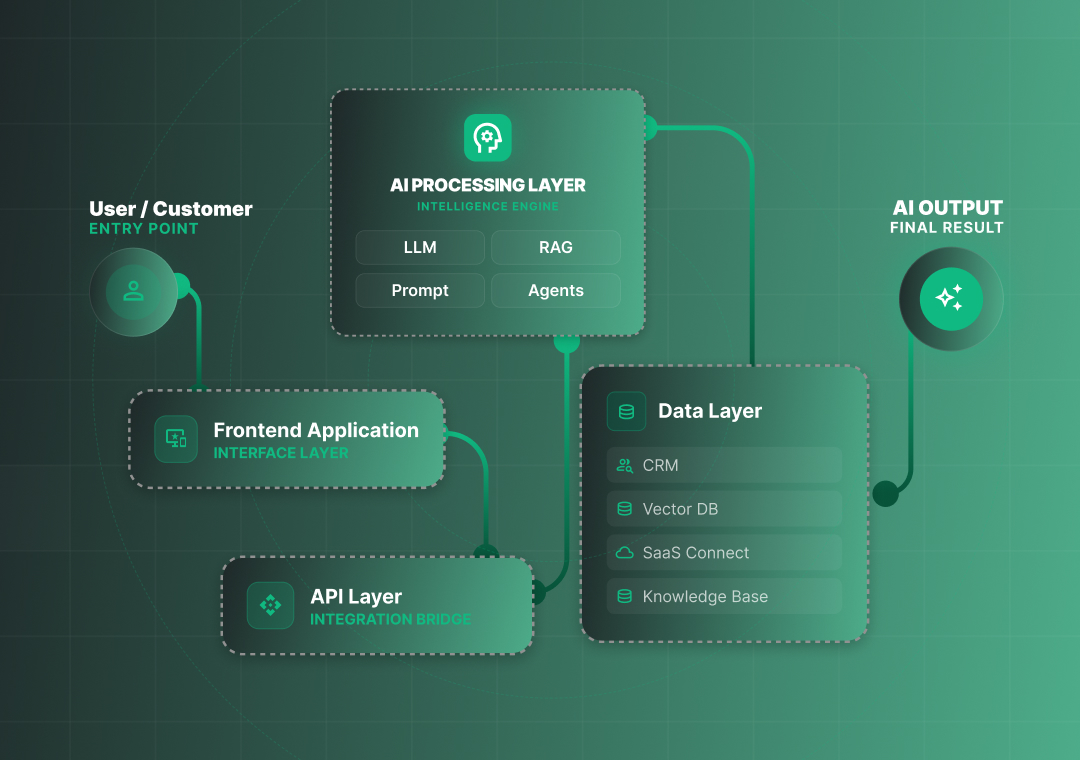
This architecture transforms traditional SaaS platforms into intelligent systems
But Not Developers. AI amplifies human capability, eliminating repetitive work while empowering engineers.
Companies that complete this checklist move from AI experimentation → AI operationalization.
What drives success and failure in enterprise AI
Successful companies treat AI as engineering infrastructure, not just software tools.
One of our SaaS clients struggled with manual proposal creation for enterprise deals.
Problem: Manual Struggles
SaaS client spending 8-10 hours per manualproposal, leading to massive friction.
• Technical architecture design
• Scope documentation
• Pricing breakdown
• RFP response formatting
AI-Powered Solution
Proposal system integrated with CRM for automated data fetching and dynamic content generation.
• 80% Time Reduction
• Sales teams generated proposals in minutes instead of hours.
• Achieved higher consistency &faster deal cycles across global teams.
This is the real power of becoming an AI-first engineering organization.
Ai is not just another technology trend
Let’s build the next generation of AI-powered systems together


